The Right Time to Seek Feedback (It’s Earlier Than You Think)
There’s an assumption many writers carry with them, which is before anyone else reads their work, it needs to be ready. Not just complete, but polished and considered, free of obvious flaws. Something that can stand on its own without explanation.
So, drafts are rewritten. Sentences are adjusted. Sections are revisited repeatedly. The manuscript is held back, waiting for the moment when it finally feels finished. Often, that moment never quite arrives.
The Idea of “Ready”
The idea of readiness in writing is highly elusive. I have noticed writers tend to define it in different ways:
when the prose feels strong enough
when the structure seems stable
when there are no obvious problems left
when they feel confident sharing it
But these markers are not always reliable because the closer you are to your own work, the harder it becomes to see it clearly. You can sense that something isn’t quite right but not always what it is, or how to change it. So “not ready” becomes a kind of holding pattern.
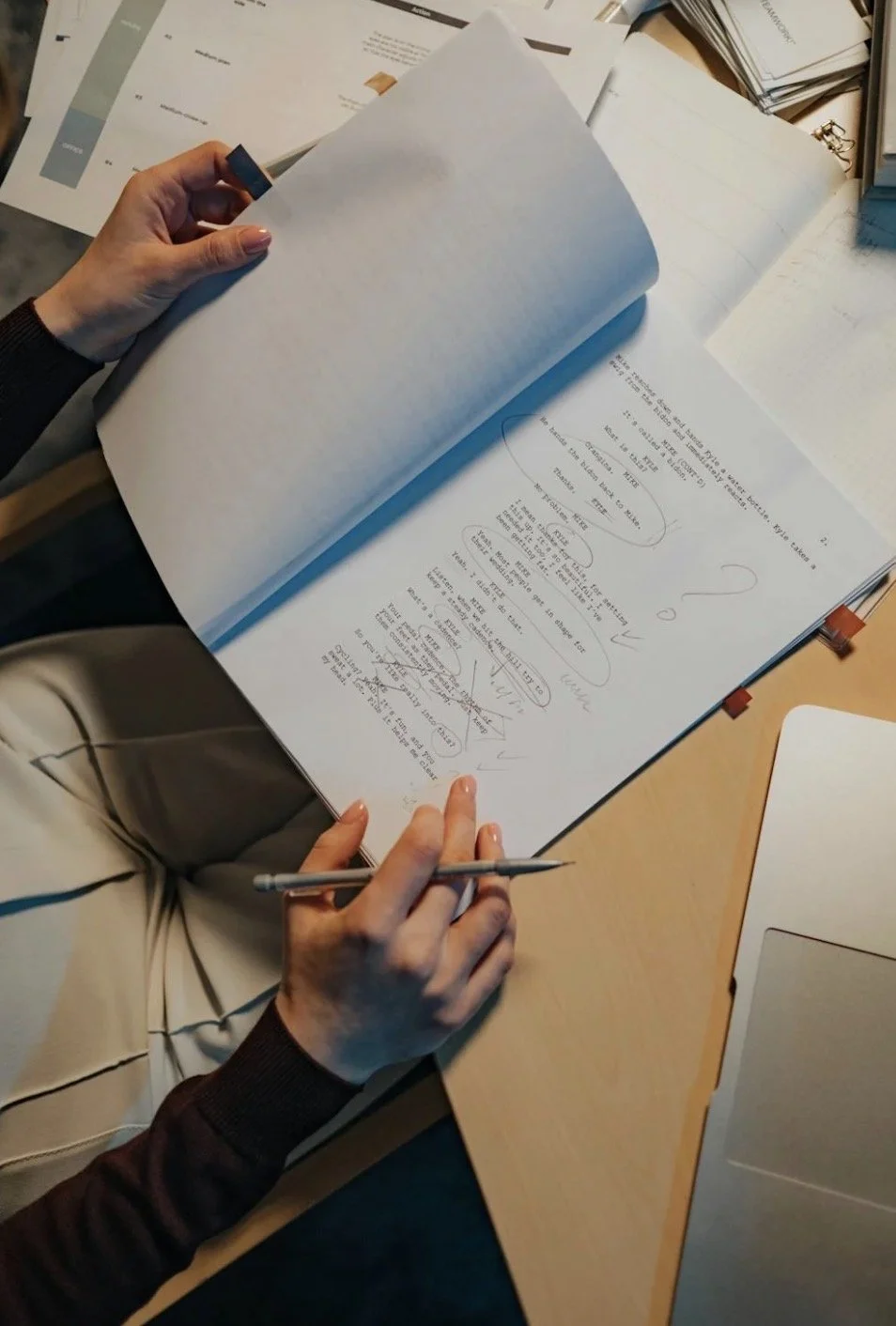
Feedback begins with careful attention to what the work is already doing.
Why Writers Wait
Waiting can feel like the responsible choice. It suggests care, commitment, or even a desire to present your work at its best. Often, it’s shaped by something else as well: the hope that uncertainty will resolve itself, the belief that more time will create clarity, fear of being judged too soon
There’s also a subtle expectation that you should be able to fix everything yourself before inviting someone else in — that expectation can keep a manuscript in limbo for much longer than it needs to be.
What Feedback Is For
Feedback is often misunderstood as a final stage, something that happens once the work is complete. In practice, it’s most valuable much earlier than that because feedback doesn’t require perfection. It requires presence.
It works best when the full draft exists, the writer has explored the material, and the shape is emerging, even if it’s not yet clear. At this stage, feedback is about clarifying. It helps answer questions that are difficult to resolve alone:
What is this piece really doing?
Where does it feel strongest?
Where is it holding back?
What needs to shift, rather than be refined?
These are structural and directional questions, and they are often easier to answer from the outside.
The Cost of Waiting Too Long
When feedback comes too late — after extensive self-editing — it can become heavier rather than lighter. Writers may have refined sections that later need to be restructured, become attached to lines that no longer serve the work, and / or spent energy polishing areas that aren’t central. These can all make revision feel more difficult than it needs to be because the order of the process has become tangled.
Early feedback helps avoid this. It allows the manuscript to change shape before the surface has been set.
Feedback as Perspective
At its best, feedback is not a verdict. It’s perspective. It doesn’t replace the writer’s voice or authority, but supports it by offering distance, clarity, and a different way of seeing the work.
A thoughtful editorial reader doesn’t arrive with answers already formed. They arrive with attention. They notice patterns. They reflect back what the manuscript is doing, sometimes more clearly than the writer can see from within it. In doing so, they help the writer move forward with greater confidence.

Good feedback begins here — with reading, not judging.
A Different Way to Think About Timing
Instead of asking: Is my manuscript ready for feedback?
It may be more helpful to ask: Am I ready to see it more clearly?
Feedback offers clarity which, more often than not, comes earlier than we expect. If you have a complete draft — even one that feels uncertain, uneven, or unfinished in places — you are likely closer to being ready than you think.
You don’t need to resolve everything alone! In fact, trying to do so can sometimes make the process heavier. There is a point in every manuscript where stepping outside your own perspective becomes the most productive next step and for many writers, that point arrives sooner than they anticipate.
Writing is a process of discovery. Editing is where that discovery becomes clear.
If you’re wondering whether now might be the right time to seek feedback, I offer ManuscriptCritiques and Editorial Assessments designed to provide clarity at this stage of the process. My approach is thoughtful, respectful, and collaborative, focused on understanding your work as it is, and helping you see where it can go next.
This post is part of the archive of The Studio Blog, which is no longer being updated. My current writing on editing, reading, and the craft of working with words now lives at The Margins — a Substack where I publish literary essays, editorial reflections, occasional personal writing, and a monthly newsletter. It's free to read, and I'd be glad to have you there.
— Laura
