.
Creative Nonfiction — Demonstration Edit
This is a fictional demonstration sample created for illustration. I never share client work.
Creative nonfiction encompasses essays, reflective pieces, and idea-driven writing that blends narrative with observation. When I edit this genre, my aim is to support clarity of thought and continuity of tone while preserving the writer’s distinctive way of seeing the world. CNF thrives on precision, not only in language, but in the movement of ideas, and careful editing can help ensure those ideas land with coherence and confidence.
The example below was created specifically for demonstration. The Before extract contains loose phrasing, structural drift, and moments where abstraction softens the focus. The After version reflects a line edit that sharpens argument, refines rhythm, and brings clarity to the piece without flattening its reflective tone.
Editing CNF differs from memoir in that the emphasis falls less on lived experience and more on the movement of thought. Instead of shaping scenes or emotional sequences, the work often involves clarifying conceptual progression, strengthening the connective tissue between ideas, and refining the rhythm of reflective prose. My role is to help the writing express its insights with precision and confidence, while ensuring the voice remains unmistakably the author’s.
Good creative nonfiction asks not only what the writer wants to say, but how they want the reader to arrive there. These samples show how editorial guidance can strengthen the path between thought and expression.
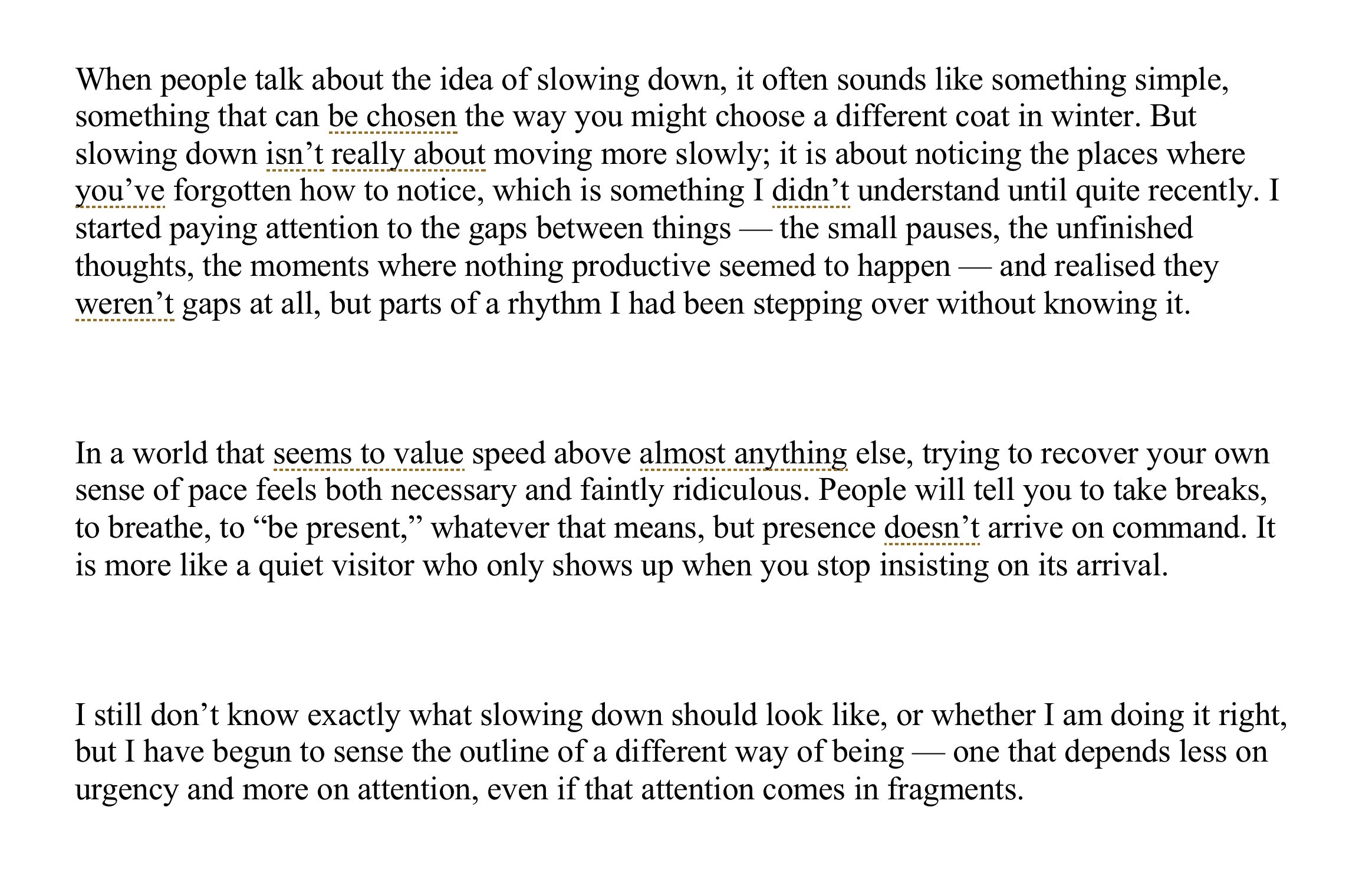
Before — Unedited draft
This early version includes repetition, loose conceptual framing, and vague metaphors that make the argument feel unfocused. These issues offer opportunities to tighten structure and clarify the progression of ideas.
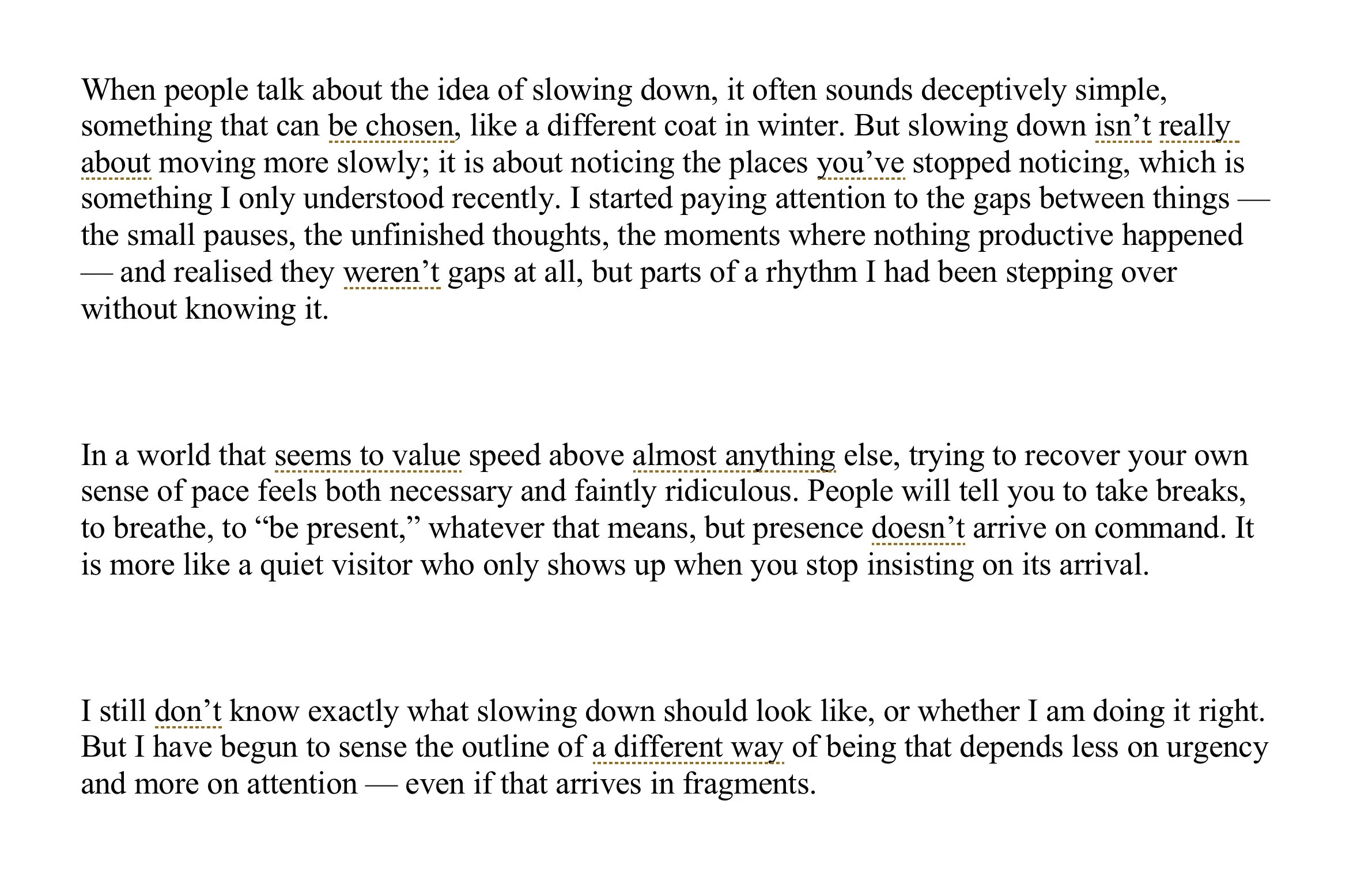
After — Edited for clarity, flow, and conceptual precision
This revision strengthens transitions, refines language, and stabilises the reflective tone, helping the piece move with greater coherence while preserving the writer’s voice and cadence.
Key editorial improvements:
Clarified conceptual progression to stabilise the argument
Refined transitions to strengthen flow between ideas
Reduced abstraction to anchor insights in clearer language
Improved sentence rhythm for smoother reflective movement
Strengthened metaphorical precision to avoid vagueness
Tightened structure to support coherence and shape
Balanced introspective tone with clarity to enhance readability
Ensured voice remained authentic while sharpening expression
Creative nonfiction relies on clarity of thought and a strong internal rhythm; the next sample demonstrates how tracked changes can reveal the precision and care behind that process.
If you’d like to see how this level of editing might support your own manuscript, you’re welcome to request a complimentary 500-word sample edit or get in touch for an informal chat about your project.