
.
TRACKED CHANGES — LINE-LEVEL EDITING SAMPLE
This is a fictional demonstration sample created for illustration. I never share client work.
Line-level editing is where the finer craft of prose takes shape. It focuses on clarity, rhythm, tone, and intention at the sentence level, strengthening what’s already on the page rather than reshaping the story itself. This example shows how small but thoughtful adjustments: word choice, pacing, internal logic, and stylistic consistency, can sharpen the reader’s experience while preserving the writer’s voice.
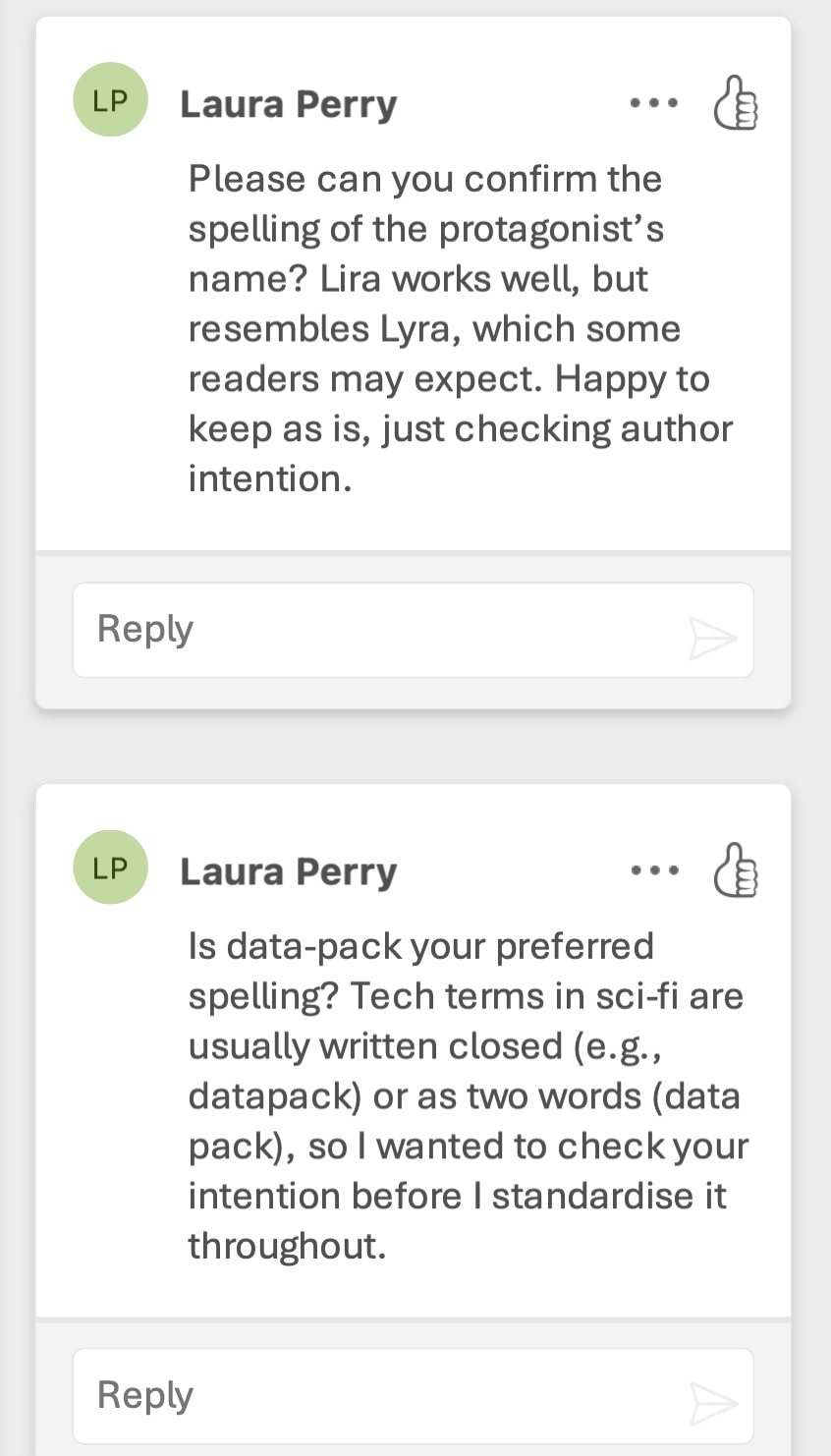
The passage below includes a short excerpt presented with tracked changes, illustrating how I refine language, resolve ambiguity, smooth transitions, and enhance narrative cohesion. Comments highlight questions I would typically raise with an author to confirm intention and ensure consistency across the manuscript.
My aim in this kind of work is simple: to help the writing read as cleanly and confidently as possible, while honouring the tone, worldbuilding, and emotional texture the author has created.
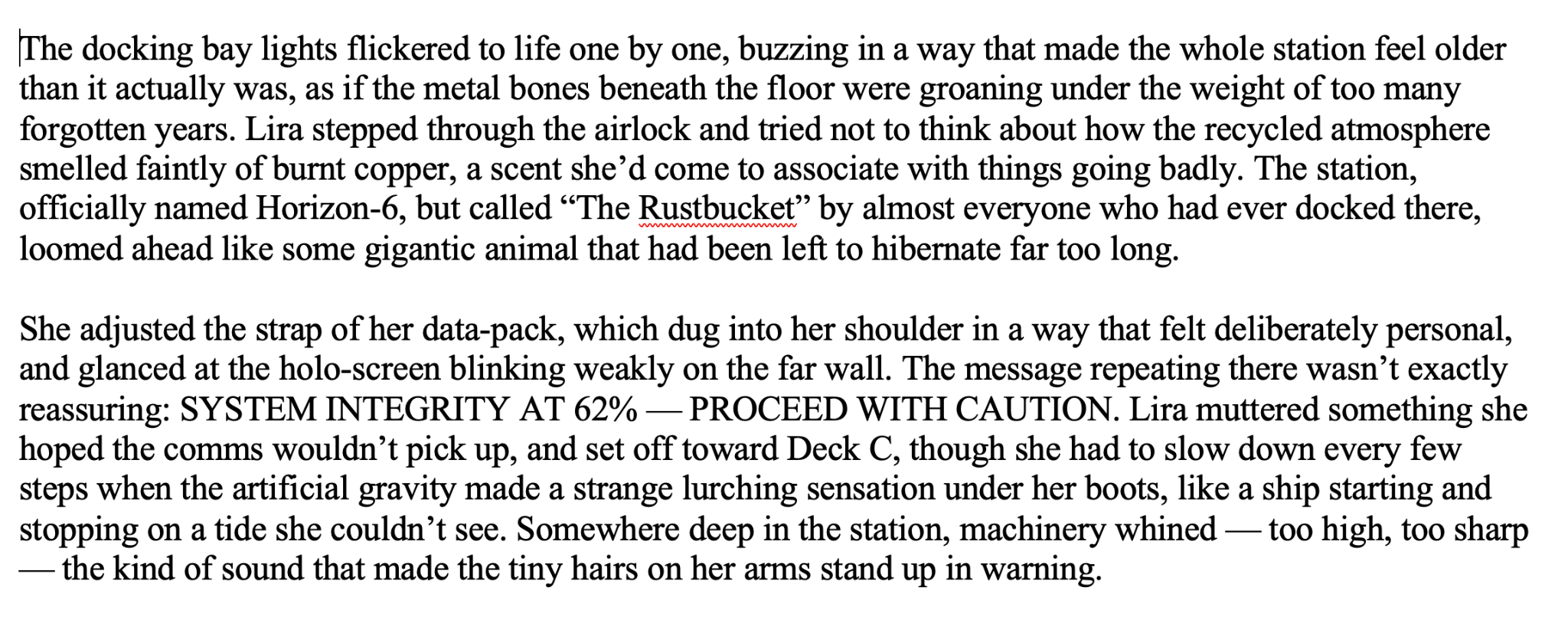
Before — Unedited draft
This early draft contains uneven phrasing, layered metaphors competing for focus, minor logic gaps, and technical terminology that would benefit from consistency. These elements offer opportunities to enhance flow, strengthen clarity, and ensure the worldbuilding feels grounded and intentional.
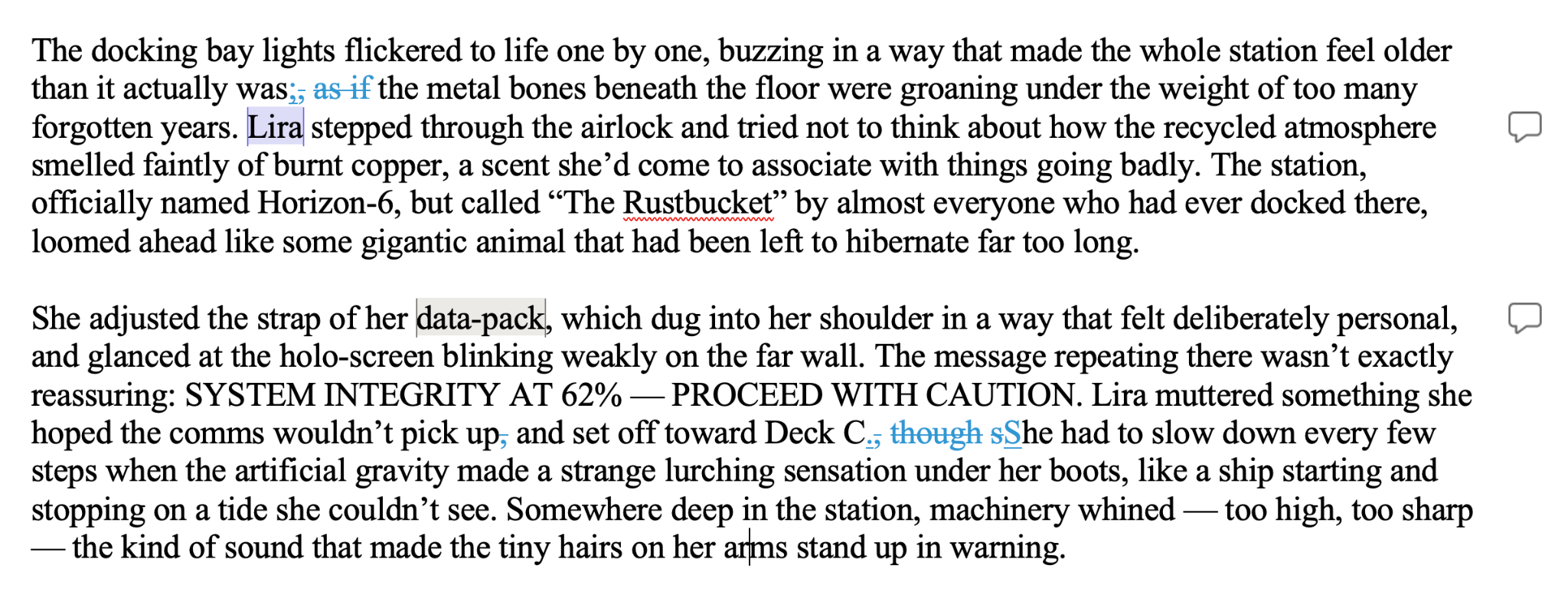
After — Edited for clarity, flow, and conceptual precision
This line edit clarifies imagery, refines rhythm, strengthens cohesion, and aligns technical language with genre expectations. Comments address areas where author intention needs to be confirmed, ensuring stylistic and worldbuilding choices remain consistent across the manuscript.
Key editorial improvements:
Smoothed sentence rhythm for stronger narrative momentum
Refined metaphorical language to avoid competing imagery
Clarified technical terminology for consistency and believability
Strengthened worldbuilding details to support immersion
Improved internal logic within descriptions and transitions
Reduced minor redundancies for cleaner prose
Enhanced character focus by tightening surrounding detail
Used comments to flag author-intention questions that affect style and continuity
Line-level editing brings precision to the page; the rest of the portfolio shows how this approach shifts across genres.
If you’d like to see how this level of editing might support your own manuscript, you’re welcome to request a complimentary 500-word sample edit or get in touch for an informal chat about your project.