What Editors Look For Before the Line Edits Begin
Most writers imagine editing as a red-pen exercise: tightening sentences, correcting grammar, adjusting punctuation, and replacing a word here or there.
Those things certainly matter, but they don’t come first. Before any line edits begin, an editor is looking for something much larger. We’re not scanning for commas, but listening for intention. We’re asking quiet structural questions, and trying to understand what the manuscript wants to become. Line edits only work once the foundation is sound.
What Is This Manuscript Really About?
Writers often begin with a premise: a character, a moment, a question, a memory. But as drafts grow, the deeper subject begins to emerge.
A novel that starts as a mystery may become a story about grief.
A memoir about travel may quietly become a story about belonging.
A nonfiction book about productivity may reveal itself as a book about identity and pressure.
Before adjusting sentences, an editor asks:
• What is the core thread here?
• Is that thread visible?
• Is everything else serving it?
If the manuscript’s centre isn’t yet clear, line editing too soon can polish the wrong thing.
Structure Before Sentences
Many manuscripts feel “off” not because of weak prose, but because of structure.
Editors ask:
Does the beginning truly begin in the right place?
Does the middle deepen or simply extend?
Does the ending feel earned?
Sometimes a manuscript needs reordering rather than rewriting. Sometimes clarity comes from moving a chapter, trimming repetition, or strengthening transitions.
Line edits are like interior decoration. Structure is architecture — you can’t hang curtains before the walls are steady.
Consistency of Voice
More than anything stylistic, voice lends itself to steadiness.
An editor listens for:
shifts in tone
moments where confidence wavers
places where the prose feels under or overworked
sections that sound unlike the rest
Writers often tighten up when the material becomes vulnerable or complex. The voice can grow formal or defensive without the writer noticing.
Before refining individual sentences, an editor asks:
Does this feel like the same writer throughout?
If voice is inconsistent, line edits can accidentally smooth away individuality instead of strengthening it.
Where the Energy Drops
Every manuscript has sections where the energy shifts.
Editors notice:
repetition of ideas
scenes that restate rather than advance
paragraphs that explain what readers already understand
arguments that circle without moving forward
Rather than thinking of these things as failures, it’s helpful to reframe them as signals. When energy drops, it usually means one of three things:
The point has already been made.
The scene needs sharper stakes.
The manuscript is protecting itself from something deeper.
Before touching individual lines, we identify these stretches because line editing cannot fix structural drag.
The Reader’s Experience
Writers know their material intimately. Editors read with distance.
We ask:
• Where might a reader feel confused?
• Where might they want more?
• Where might they need less?
• Where does curiosity rise, and where does it fade?
This perspective isn’t about judgment. It’s about orientation.
Before adjusting the rhythm of sentences, we step back and ask:
What is it like to move through this manuscript for the first time?

Before refining sentences, an editor asks what it feels like to move through the work.
Why Line Edits Come Later
Line editing is very precise work. It sharpens clarity, tightens rhythm, removes friction, and strengthens language.
But if done too early, it can become a distraction. Polishing sentences in a chapter that may later be cut is exhausting for a writer. Refining paragraphs that might need restructuring wastes time, energy, and confidence.
The strongest editorial work follows a natural order:
Clarify the intention.
Strengthen the structure.
Ensure consistency of voice.
Refine the prose.
When that order is respected, line edits feel purposeful rather than overwhelming.
What This Means for Writers
If you’re deep in a draft and feel uncertain about the shape of your manuscript, you’re at exactly the stage where stepping back can be more powerful than pushing forward.
An editor doesn’t arrive to correct you. We arrive to help you see your work clearly, before the fine details are addressed.
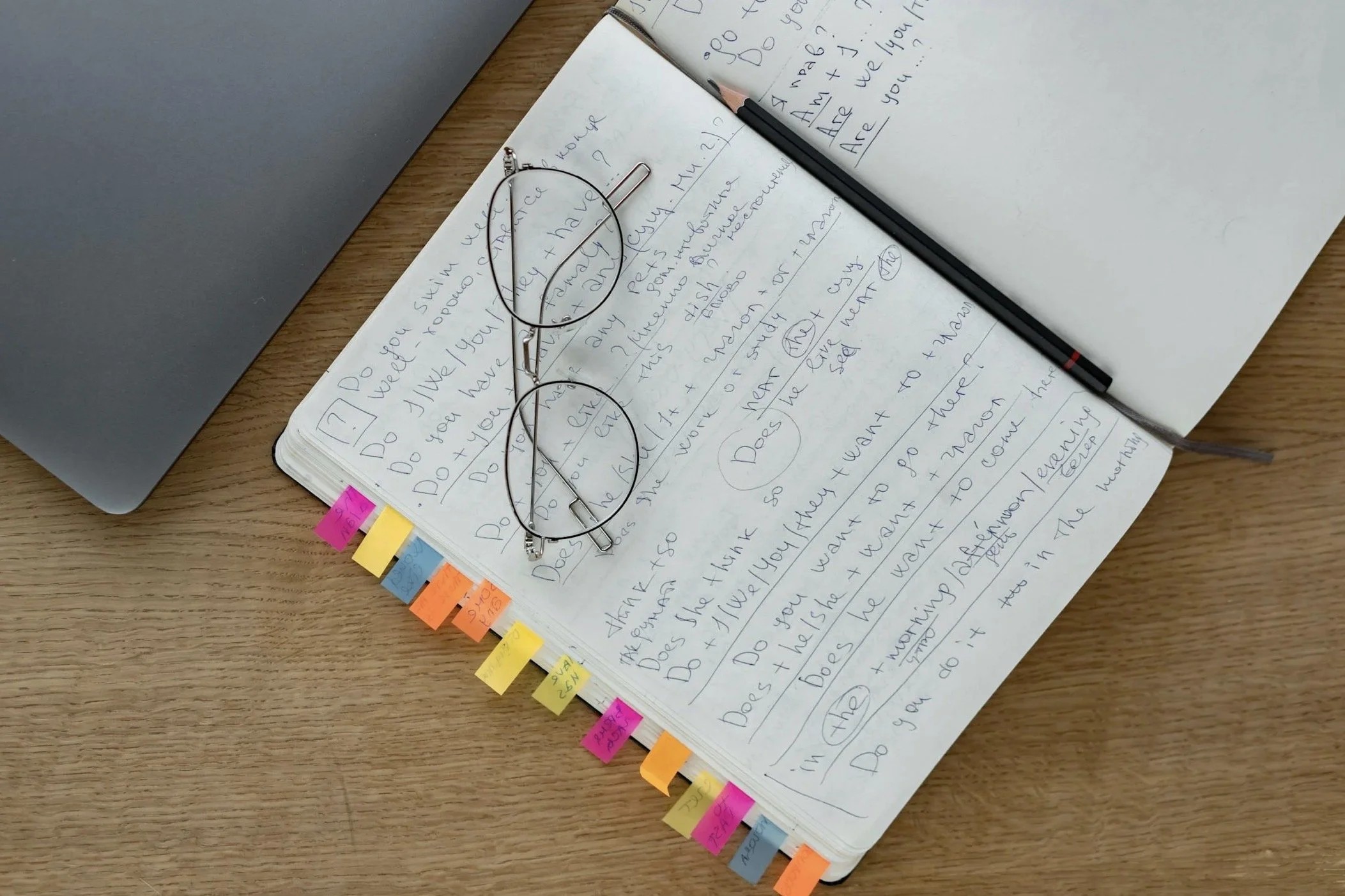
Editorial work often starts here: stepping back to see the whole before refining the parts.
Line edits are important. But they are not the beginning of the conversation.
If you’d value a clear, careful perspective on your manuscript, I offer Manuscript Critiques and Editorial Assessments that focus on structure, voice, and direction before the line edits begin. I work thoughtfully and respectfully, taking time to understand what you’re trying to create. Editing, at its best, is a conversation; one that supports your voice rather than reshaping it into something else.
This post is part of the archive of The Studio Blog, which is no longer being updated. My current writing on editing, reading, and the craft of working with words now lives at The Margins — a Substack where I publish literary essays, editorial reflections, occasional personal writing, and a monthly newsletter. It's free to read, and I'd be glad to have you there.
— Laura
