I Reclaimed the Em Dash: On AI, Shame, and the Right to Write Well
A few months ago, I made a decision: I stopped using em dashes in my writing. It wasn’t because I disliked them. On the contrary, I admire the em dash, how it carries a thought mid-stride, how it interrupts, expands, refines. It’s elegant, flexible, human. But I feared what it signified. The em dash had become a tell, a marker that writing might have been AI-generated. Its smoothness, its overuse, had become suspect. And so, I avoided it and used hyphens incorrectly. I gave in to a strange kind of typographic shame.
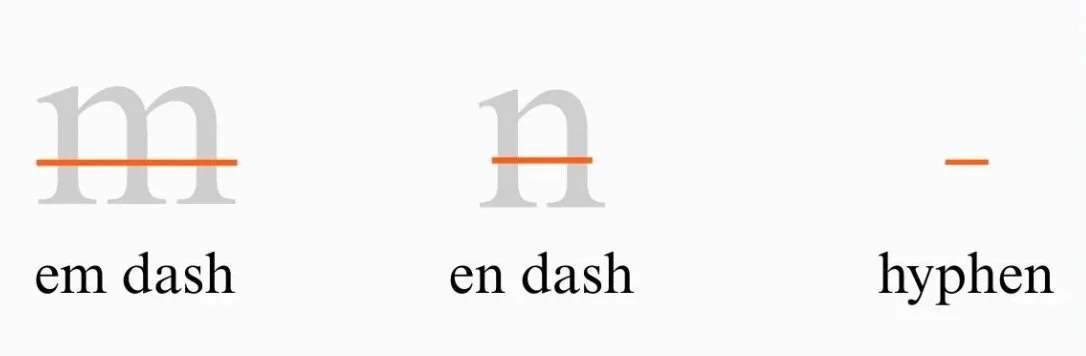
Spot the difference: The em dash (—), en dash (–), and hyphen (-) may look similar, but they each serve distinct roles in punctuation. For some writers, their usage has taken on new significance in the AI era.
The fear of being seen as inauthentic
In this strange, hybrid age of writing, people are scanning texts for signs of machinery. Some readers admit to skipping the substance of a piece entirely, leaping instead to surface-level judgments: Is this too clean? Too coherent? Too professional?
We’ve always been suspicious of polish, afraid that it masks intention. But now, we are suspicious of fluency itself. Online, some are encouraging writers to include intentional mistakes, or signal their humanness through scattered typos, eccentric punctuation, or oddly broken syntax. The idea is to prove you are real, not just that you’re good. I understand the impulse because I’ve acutely felt it myself.
But I’ve since come to realise how warped this logic is. The pressure to write less well, to muddy your meaning or fracture your phrasing so that no one mistakes you for a machine, feels like a performance of imperfection. And it risks discouraging those who are just starting out who may be using tools like AI as scaffolding, as encouragement, as a way in.
Let me be clear: there is no shame in using AI to support your writing. What matters is the thought behind the work. AI can be a brainstorming partner, a mirror, a thesaurus, a prompt. It can’t replace the meaning you bring to the table. It doesn’t know your clients, your readers, your memories. It doesn’t know how your voice sounds when you’re tired, or giddy, or full of fight. It can offer suggestions, but you choose the ones that sing.

Writing has always been an act of exposure, but the pressure to perform authenticity is a modern burden.
I’m reclaiming the em dash
And so, I’ve decided to reclaim the em dash because sometimes it’s the right tool for the job. There are moments where only that perfectly smooth interruption will do. I’m also tired of making myself small to avoid suspicion. I am an editor after all, and I believe in precision and grace. When I use an em dash, I use it on purpose. And when I don’t, that’s on purpose, too.
AI has changed writing — and reading
AI hasn’t only changed how we write, but also how we read. Readers are warier, yes. But also savvier. They’re asking new questions, demanding transparency. And we as writers and editors are adapting in real time, developing our own instincts about what feels manufactured and what feels lived.
But the answer shouldn’t be to dial down our clarity. It’s to write with conviction. I’ll continue to advise my clients compassionately, and I’ll keep reminding people that it’s okay to write imperfectly, just as it’s okay to aim high. I don’t believe in shaming anyone into better writing. I believe in curiosity, and in coaxing your voice out of hiding. And if your sentence calls for an em dash, use it.
If you’re looking for an editor who values clarity over shame, and who understands the pressures of writing in an AI-shaped world, I’d love to work with you.
This post is part of the archive of The Studio Blog, which is no longer being updated. My current writing on editing, reading, and the craft of working with words now lives at The Margins — a Substack where I publish literary essays, editorial reflections, occasional personal writing, and a monthly newsletter. It's free to read, and I'd be glad to have you there.
— Laura
